Thymogen
EW - Glu-Trp
Thymus-derived immunomodulatory dipeptide. Often discussed as the synthetic active sequence isolated from Thymalin research.
Complete English guide to Russian peptides
Professor Vladimir Khatskelevich Khavinson (1946-2024) built a decades-long Russian research program around peptide bioregulators. English readers usually meet only Epitalon. This complete guide separates synthetic short peptides, natural organ complexes, Russian clinical preparations, benefits from studies, dosage from studies, side effects, and FDA/legal status so the field is easier to navigate.
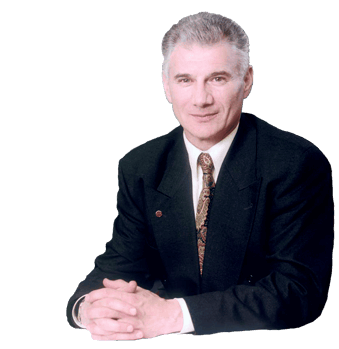
Written by: Khavinson Atlas editorial team.
Medical review status: pending. This page has not been reviewed by a physician or pharmacist.
Last reviewed: May 5, 2026.
Funding: no peptide sales, vendor links, sponsorships, or affiliate commissions.
This site is a research navigation aid, not medical advice. Do not use it to decide whether to buy, inject, compound, prescribe, or combine peptides. Many peptides discussed online are not FDA-approved drugs, and product identity, purity, route, sterility, dose, and adverse-event data may be uncertain. Discuss any health decision with a licensed clinician.
Quick answer
Khavinson peptide bioregulators are short peptides or organ-derived peptide complexes from a Russian research tradition associated with Professor Vladimir Khavinson and colleagues. In English searches, the category usually includes synthetic short peptides such as Epitalon, Pinealon, Vesugen, Vilon, and Thymogen; tissue-extract clinical preparations such as Thymalin and Epithalamin; and commercial Cytomax/Cytogen product-family names.
The key SEO and research problem is terminology. A single tissue target can appear as a natural extract, a synthetic sequence, a transliterated Russian product name, and a vendor-facing supplement family. This site maps names and sources without giving protocols or buying advice.
Research guides
Separate static pages target the major search-intent clusters without crowding the homepage.
Why this field is confusing
The phrase "Khavinson peptides" is used loosely. It can mean early tissue-extract drugs such as Thymalin and Epithalamin, synthetic two-to-four amino acid sequences such as Epitalon and Vesugen, or later oral/sublingual supplement families such as Cytomax and Cytogen.
The high-interest Western search terms are usually "Epitalon," "Pinealon," "Thymalin," "Vesugen," and "peptide bioregulators." The deeper Russian-language catalog is larger, and many names have multiple transliterations.
Keyword intent map
Many search results for Russian peptides, peptide bioregulators, Epitalon benefits, Thymalin dosage, Pinealon side effects, or Vesugen FDA status jump directly to protocols or vendor claims. This site treats those as research questions first.
| Search intent | Best page | How we answer it |
|---|---|---|
| Khavinson peptides complete guide / Russian peptides list | Complete list | Names, sequences, target tissues, and alternate spellings without product ranking. |
| Epitalon benefits from studies, dosage from studies, side effects, FDA status, legal status | Epitalon / AEDG | Separates identity and study exposures from anti-aging protocols and FDA-status claims. |
| Thymalin benefits from studies, dosage from studies, side effects, FDA status, legal status | Thymalin vs Thymogen | Maps thymus peptide terminology, older study-dose language, and immune-claim limits. |
| Cytomax vs Cytogen, Cytamins, cytomedins, FDA status, legal status | Cytomax vs Cytogen | Explains product-family language, supplement/catalog caveats, and why catalogs are not clinical proof. |
| Pinealon dosage, memory benefits, side effects, FDA/legal status | Pinealon | Uses secondary literature and mechanism studies without presenting nootropic or treatment protocols. |
| Vesugen dosage, vascular benefits, side effects, FDA/legal status | Vesugen | Separates cell-culture exposures, vascular mechanism markers, and limited Russian clinical abstracts from treatment claims. |
| Khavinson peptide dosage / peptide side effects | Safety and legal guide | Explains why protocols are excluded and why side effects depend on product, route, purity, sterility, and patient context. |
| Peptide forum, peptide Reddit, protocol, cycle, or stack claims | Forum claim checks | Uses forum language to identify search demand while keeping anecdotes, vendor reviews, and stack threads separate from evidence. |
Editorial method
The highest-confidence facts on this site are identity facts: names, amino-acid sequences, source documents, transliterations, and which product family a term belongs to. Health outcomes are treated more cautiously because much of the literature is preclinical, Russian-language, observational, or concentrated in the Khavinson research network.
Commercial catalogs are used only to identify product-family names and claimed tissue targets. They are not used as proof that a peptide treats disease, slows aging, or is safe for human use.
Safety and regulation
A peptide appearing in a paper, Russian clinical review, supplement catalog, or online protocol does not mean it is FDA-approved, clinically proven, sterile, correctly labeled, or appropriate for human use. U.S. readers should treat anti-aging, telomerase, immune, and disease-treatment claims as unestablished unless a regulator and modern clinical evidence say otherwise.
Catalog
Use search or the filters to narrow by category. Cards use cautious language such as "researched for" or "positioned as" because much of the literature comes from Khavinson's group or Russian-language sources.
Showing all catalog entries.
| Name cluster | Type | Sequence | Target / context | Evidence caveat |
|---|---|---|---|---|
| Epitalon / Epithalon / AEDG | Synthetic short peptide | AEDG | Pineal / neuroendocrine research | Popular Western term; human claims remain limited and not protocol guidance. |
| Thymalin / Timalin | Clinical peptide complex | Not a single sequence | Thymus / immune-aging literature | Russian clinical history does not equal U.S. approval. |
| Thymogen / Timogen | Synthetic short peptide | EW | Thymus / immune research | Often confused with Thymalin and thymosin alpha-1. |
| Pinealon / EDR | Synthetic short peptide | EDR | Brain / nervous-system research | Mostly preclinical or Khavinson-network literature. |
| Vesugen / Vezugen / KED | Synthetic short peptide | KED | Vascular / endothelial research | KED also appears inside other Khavinson sequences. |
| Cytomax / Cytogen | Commercial taxonomy | Varies | Natural complexes vs synthetic short peptides | Catalog names are not clinical proof. |
Names are from Khavinson's 2014 table unless marked Cytogen-only; common English spellings are added.
EW - Glu-Trp
Thymus-derived immunomodulatory dipeptide. Often discussed as the synthetic active sequence isolated from Thymalin research.
KE - Lys-Glu
Short dipeptide researched for tissue-regeneration signaling and immune-related gene-expression work.
KE - Lys-Glu
Retina-focused peptide name in the Khavinson table. Shares the KE sequence listed for Vilon but is positioned around retinal function.
AED - Ala-Glu-Asp
Tripeptide positioned for cartilage, joints, and connective-tissue aging research.
EDR - Glu-Asp-Arg
Brain and pineal-axis tripeptide studied for neural aging models, circadian biology, and neuroprotection hypotheses.
EDG - Glu-Asp-Gly
Respiratory-system peptide, also transliterated from Russian sources as Honluten.
KED - Lys-Glu-Asp
Vascular tripeptide researched in endothelial, capillary, and microcirculation contexts.
EDP - Glu-Asp-Pro
Immune/thymus-oriented tripeptide described as an immunomodulator in the Khavinson table.
EDL - Glu-Asp-Leu
Liver-function peptide in the synthetic catalog, sometimes discussed alongside broader digestive-system bioregulation.
AEDG - Ala-Glu-Asp-Gly
The best-known Khavinson short peptide in Western longevity circles. It is tied to pineal, neuroendocrine, melatonin, and telomerase research, but it is not the same as Epithalamin.
KEDP - Lys-Glu-Asp-Pro
Prostate-focused tetrapeptide positioned around urogenital tissue regulation.
KEDA - Lys-Glu-Asp-Ala
Liver-function tetrapeptide appearing in chromatin and aging-related peptide bioregulator literature.
AEDP - Ala-Glu-Asp-Pro
Brain/cortex tetrapeptide discussed in neural tissue and central nervous system research.
KEDW - Lys-Glu-Asp-Trp
Pancreas-focused tetrapeptide studied in pancreatic-cell differentiation and endocrine-function contexts.
AEDR - Ala-Glu-Asp-Arg
Cardiac/myocardial tetrapeptide researched for heart-tissue gene-expression and stress-response models.
KEDG - Lys-Glu-Asp-Gly
Male reproductive and testicular-function tetrapeptide in the Khavinson catalog.
AEDL - Ala-Glu-Asp-Leu
Bronchial tetrapeptide researched for respiratory epithelium gene-expression and tissue-function hypotheses.
Sequence reported inconsistently
Bladder-focused synthesized Cytogen listed in commercial catalogs. Public English sources disagree on the exact short sequence, so it is separated from the 2014 table entries.
These are commercial natural peptide-complex names, not single defined amino-acid sequences.
Pineal gland / neuroendocrine system.
Thymus / immune system.
Retinal tissue / visual system.
Blood vessels / vascular system.
Bone marrow / blood-forming tissue.
Parathyroid gland.
Adrenal glands.
Muscle tissue.
Female reproductive system.
Prostate tissue.
Kidney tissue.
Liver tissue.
Joints, cartilage, and spine.
Stomach mucosa.
Pancreas.
Male reproductive system / testes.
Brain tissue.
Bronchial mucosa.
Heart / myocardium.
Urinary bladder.
Thyroid gland.
These are commonly cited as clinical peptide preparations from the same research program. Regulatory status is country-specific.
Thymus peptide complex used in Russian immunology and gerontology literature.
Pineal-gland peptide complex. Often confused with Epitalon, the synthetic AEDG tetrapeptide.
Cerebral-cortex polypeptide complex associated with Russian neurology use.
Prostate peptide preparation, also encountered through related names such as Samprost and Vitaprost.
Retinal peptide preparation appearing in ophthalmology-related Russian literature.
Also a defined synthetic dipeptide, so it appears in both the clinical and synthetic maps.
No matching peptides found. Try a tissue name such as "liver," "retina," or "vascular."
Evidence
Khavinson and colleagues published a substantial body of work on short peptides, tissue extracts, gene expression, protein synthesis, animal aging models, and Russian clinical use. The names and sequences in the synthetic catalog are documented in English-language papers and translated Russian literature.
Many claims are preclinical, small, observational, or concentrated within the same Russian research network. Western-style independent replication, modern randomized trials, transparent product quality data, and adverse-event reporting are limited for many entries.
No injection guidance, no cycle schedules, no vendor recommendations, no claims that a peptide reverses aging, and no assumption that a Russian supplement name maps cleanly to a pharmaceutical-grade ingredient.
Popular searches
| Search term | Usually means | Common confusion | Best next query |
|---|---|---|---|
| Epitalon | Synthetic AEDG tetrapeptide | Not identical to Epithalamin | Epitalon benefits and study dosage |
| Thymalin | Thymus peptide complex | Not the same as Thymogen EW | Thymalin dosage and side effects |
| Vesugen | Synthetic KED vascular tripeptide | KED also appears inside other peptide sequences | Vesugen FDA and legal status |
| Pinealon | Synthetic EDR brain/pineal tripeptide | Often grouped with Epitalon for sleep claims | Pinealon memory benefits and side effects |
| Cytomax | Natural organ-derived peptide complex | Not a single defined peptide sequence | Cytamins and cytomedins |
| Khavinson peptide dosage | Protocol-seeking query | Study exposure is not self-use guidance | Dosage policy |
| Peptide side effects | Safety and product-risk query | Side effects cannot be inferred from a sequence alone | Safety caveats |
| FDA status / legal status | U.S. approval or marketing-status query | Research labels and vendor pages are not approval | FDA/legal overview |
| Peptide forum / Reddit peptides | Community discussion and anecdote search | Forum posts can reveal questions, but not product safety or proof | Forum claim checklist |
FAQ
Most Khavinson peptide bioregulators discussed online are not FDA-approved drugs in the United States. Some preparations have Russian or former USSR clinical histories, but regulatory status differs by country and product.
No. Dose or exposure details are included only when they are needed to describe a study setting. They are not instructions for self-use, injections, compounding, or product selection.
Reliable adverse-event rates are not established for many peptide bioregulators discussed online. Product identity, purity, sterility, route, storage, dose, interactions, and patient context can change the risk profile.
No anti-aging benefit should be treated as proven from this catalog. Some claims come from preclinical, observational, Russian-language, or Khavinson-network literature, which is not the same as modern independent confirmation.
In the Khavinson commercial taxonomy, Cytomaxes are natural organ-derived peptide complexes, while Cytogens are synthesized short peptide bioregulators intended to represent a main active short sequence.
No. Epithalamin is a pineal-gland peptide complex; Epitalon or Epithalon is a synthetic tetrapeptide, commonly written AEDG, developed from the same research tradition.
No. The research program involved collaborators and institutions, especially the St. Petersburg Institute of Bioregulation and Gerontology and earlier Soviet/Russian medical research settings. This site uses "Khavinson peptides" the way English readers usually use it: peptides from the Khavinson research tradition.
No. Khavinson bioregulators are usually ultra-short regulatory peptides or tissue extracts. BPC-157, GLP-1 receptor agonists, and many performance peptides come from different research traditions, have different mechanisms, and have different regulatory histories.
Russian transliteration varies. You will see Epitalon/Epithalon, Cartalax/Kartalaks, Cortagen/Kortagen, Vesugen/Vezugen, Bronchogen/Bronhogen, and Thymalin/Timalin. The catalog includes common English forms so search still works.
Semax is a Russian peptide drug in its own country-specific regulatory context, but it is not usually listed as a Khavinson peptide bioregulator. It belongs to a different neuropeptide lineage and should not be folded into this catalog.
Sources
Start here before trusting vendor pages or forum protocols.